
Why Does Mascara Smudge? How to Test Private Label Mascara Before Bulk Ordering
Quick Answer
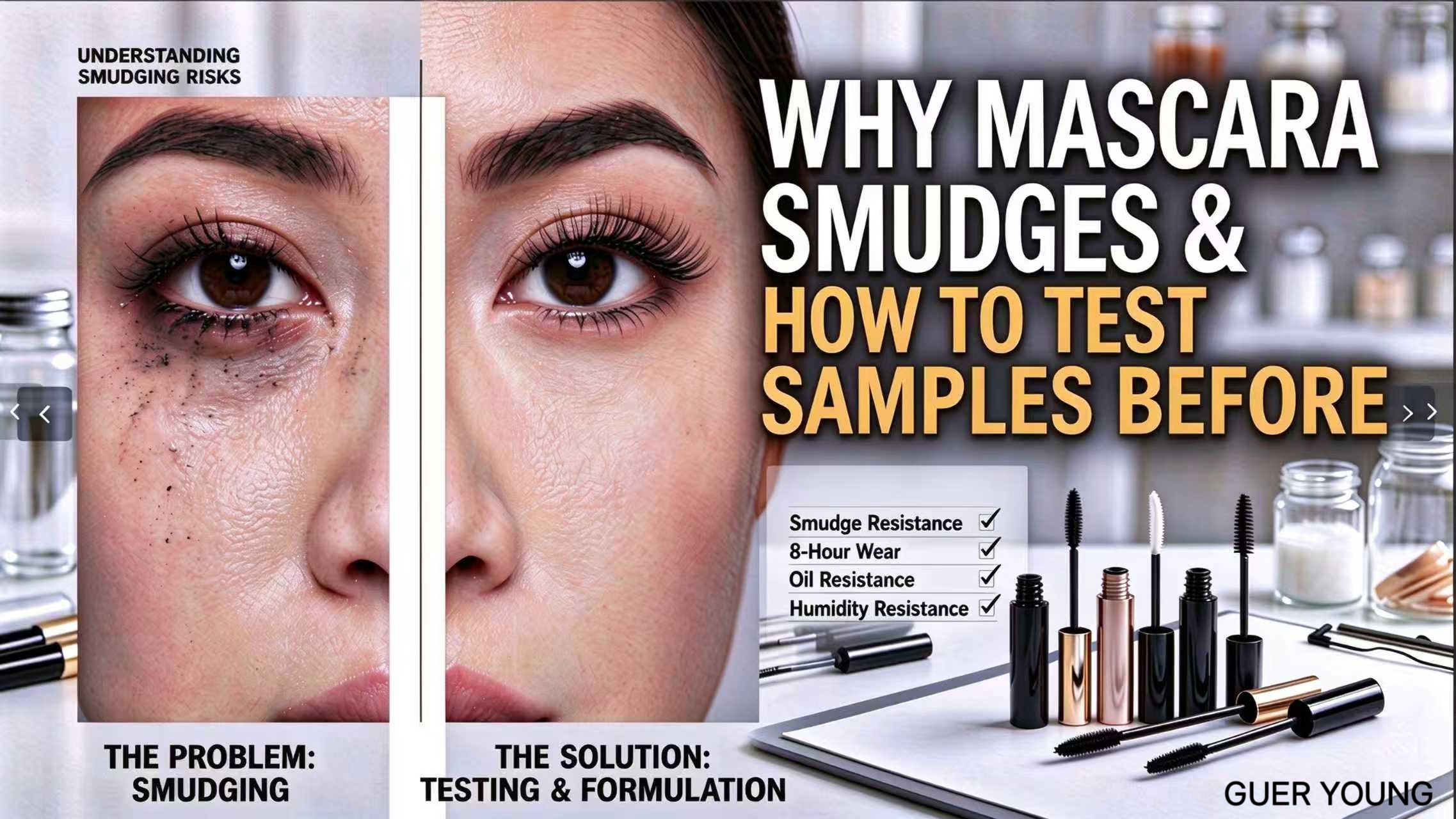
Mascara smudging is rarely caused by one single factor. It usually comes from a combination of formula film-forming properties, skin oils, humidity, application thickness, and packaging or wiper design. For sellers, the fix is not to guess. Test samples under realistic conditions and choose a private label mascara supplier that can support formula consistency, wear testing, and packaging evaluation before you place a bulk order.
Why Smudging Matters for Sellers
If you sell mascara on Amazon, Shopify, or TikTok Shop, smudging is one of the fastest ways to earn a bad review.
Customers search “why does my mascara smudge” after they notice dark marks under their eyes. They may blame the product, the brand, or their own skin. But from a seller’s point of view, smudging is a sourcing risk you can reduce before launch.
This article is part of our Private Label Mascara Sourcing Guide. Start with the full guide here.
What Actually Causes Mascara Smudging?
Smudging is rarely caused by one single factor. It usually comes from the interaction between formula, skin, environment, and application.
1. Formula Film-Forming Properties
A mascara formula needs to form a flexible film around the lashes. If that film is too soft, it may transfer to the skin. If it is too rigid, it may flake instead.
This is why a smudge-proof formula is not just about adding more wax or pigment. It is about balancing film formers, oils, waxes, and pigments.
2. Skin Oils
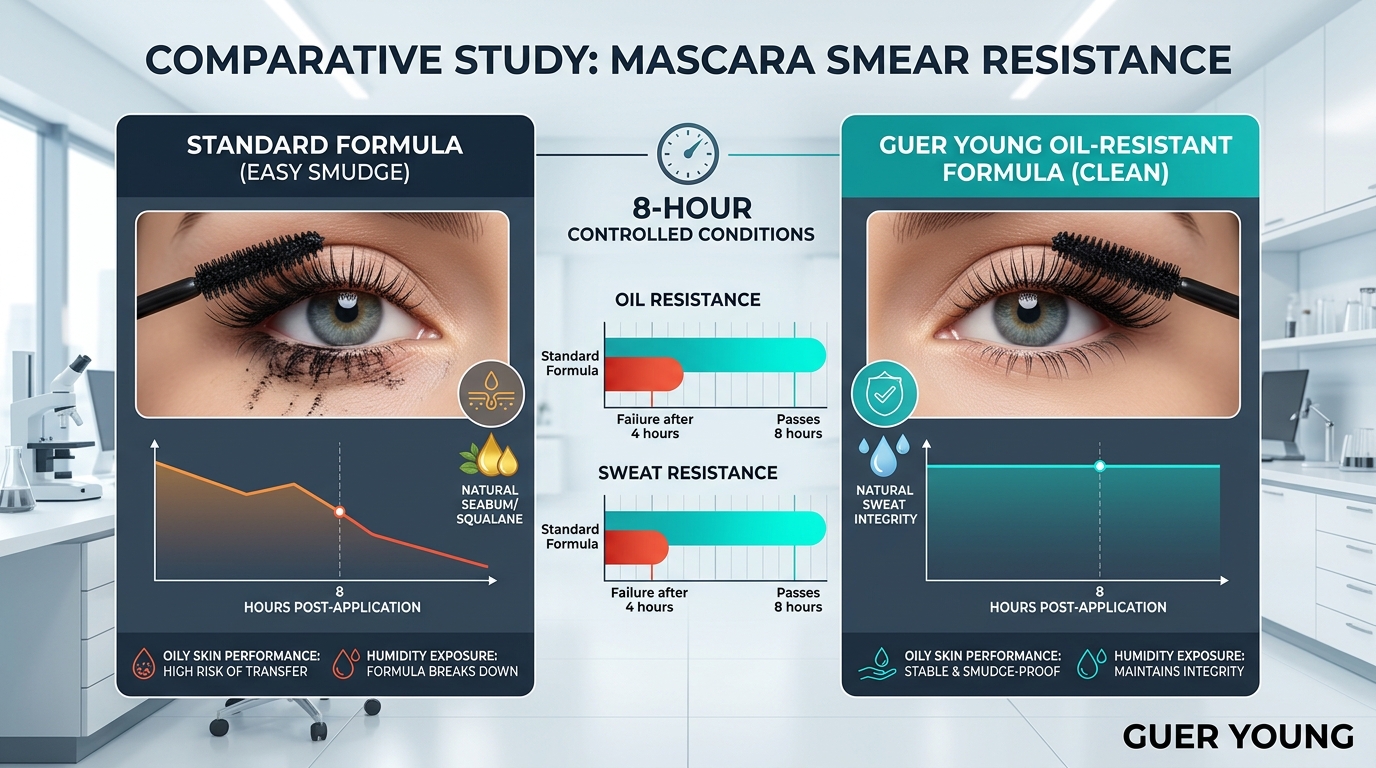
Customers with oily skin are more likely to experience smudging. Oil around the eyes can break down the mascara film and cause transfer.
If your target market includes this group, look for a mascara for oily skin that has been tested under realistic conditions.
3. Humidity and Climate
Humidity can soften the formula and increase smudging risk. A product that works in a dry climate may fail in a tropical one.
For sellers targeting Southeast Asia, the Middle East, or humid regions, a “best mascara for humid weather” claim should be supported by actual wear testing.
4. Why Waterproof and Long-Wear Mascaras Can Still Smudge
Many sellers assume:
Waterproof = smudge-proof
Long-wear = smudge-proof
But these are three different concepts:
| Claim | Main Resistance | Does It Equal Smudge-Proof? |
Waterproof | Water | No |
Long-wear | Time | No |
Smudge-proof | Oil transfer | Yes |
Waterproof mascara can still smudge because smudging is usually related to skin oils, not water. Long-wear mascara can also smudge because the longer it stays on, the more the formula interacts with oil, humidity, and application thickness.
So if you want to claim smudge resistance, you cannot rely only on a “waterproof” or “long-wear” label. You need separate smudge testing.
5. Application Thickness and Wiper Design
Too much product on the brush can lead to heavy coating, slower drying, and more transfer.
This is often connected to mascara wiper design. A wiper that removes excess product helps the brush deliver a cleaner, more even coat.
6. Packaging and Sealing
Packaging affects formula stability over time. If the mascara packaging seal is weak, the formula may dry out or change texture. That can affect application and wear.
A finished mascara supplier should evaluate tube, wiper, and closure together—not as separate parts.
Who Is Most Likely to Experience Smudging?
Not every customer has the same experience. Smudging complaints are more common among:
Customers with oily eyelids or skin
Customers living in humid climates
Customers wearing mascara for 10+ hours
Customers who apply multiple coats
Customers who expect waterproof performance
If you target these groups, you should look for a smudge-resistant mascara option rather than a standard everyday formula.
This is also why product descriptions matter. If you promise “all-day smudge-proof” but the formula is designed for natural daily wear, returns and negative reviews are more likely.
How to Test Smudging Before Bulk Ordering
The best time to find smudging problems is before mass production.
Because smudging depends on so many variables, the only reliable way to evaluate it is to test samples under realistic conditions.
How to Run a Realistic Wear Test
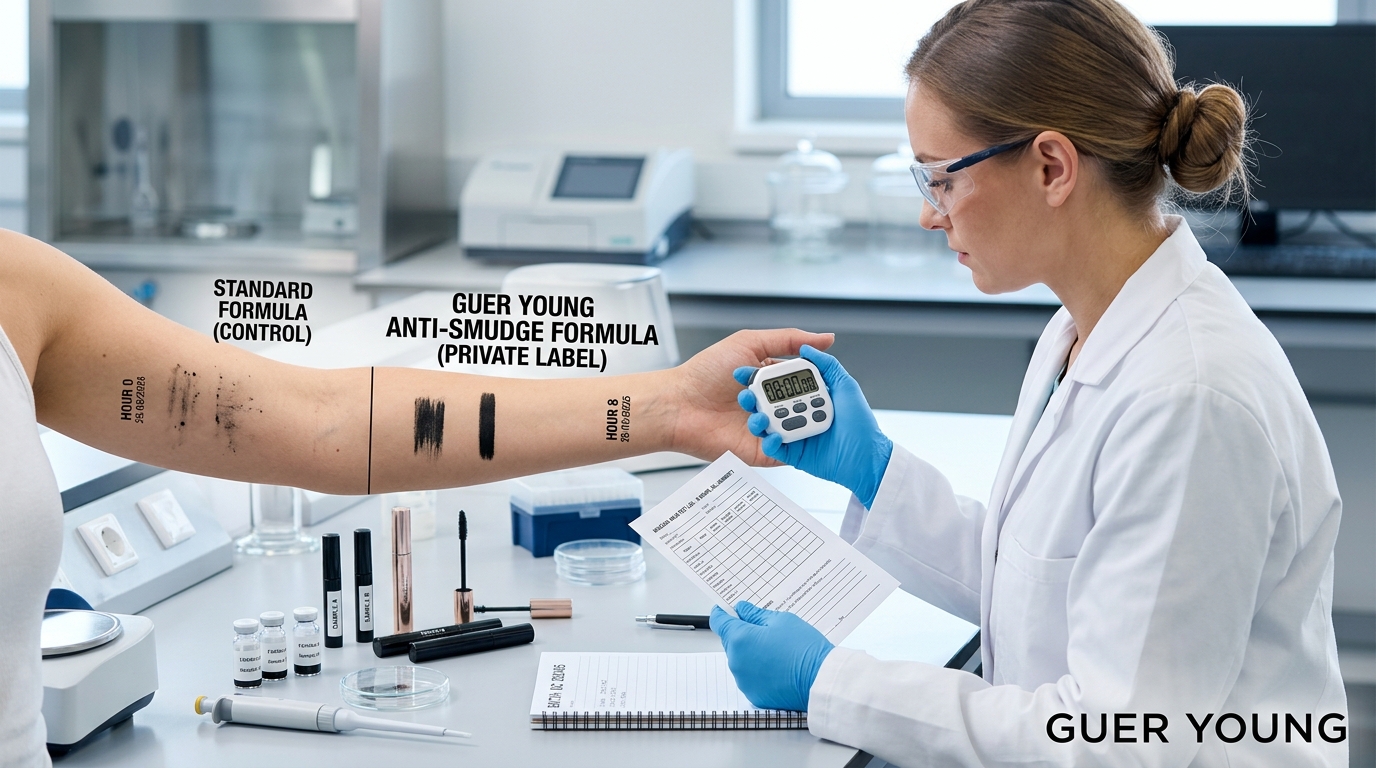
A basic mascara wear test should include:
Application at the start of the day
Check after 4 hours
Check after 8 hours
Check under humid conditions if relevant
Check on oily skin if relevant
Do not test only on dry skin in an air-conditioned room. That does not reflect real customer conditions.
How to Compare Multiple Samples
Mascara sample testing should compare more than one option. Ask your supplier for multiple formulas or brush combinations.
Use the same evaluation form for each sample. This makes it easier to compare smudging, clumping, flaking, wear, and removal.
Mascara Smudging Test Checklist
| Test Area | Test Condition | Risk | |
Wear time | 4 hours / 8 hours | Smudging under the eyes | Bad reviews |
Humidity | High-humidity environment | Formula softening | Returns |
Skin type | Oily skin | Oil transfer | Complaints |
Application thickness | 1 coat / 2 coats | Drying speed, clumping | User experience |
Removal | Regular makeup remover | Difficulty removing | Returns |
Repeated opening | After multiple uses | Drying inside the tube | Product lifespan |
Packaging | Seal, wiper, dispensing | Formula stability | Batch variation |
Formula-brush compatibility | Pickup, distribution, separation | Core performance | Review risk |
After Testing: Whether You Can Fix the Problem Depends on Your Supplier
Testing helps you find smudging risks. But whether you can solve them depends on your supplier.
If a sample smudges after 8 hours, can your supplier adjust the formula? If they can, will that adjustment affect removal, flaking, or feel? If formula consistency varies between batches, will customer experience vary too?
These are the questions that really matter before you place a bulk order.
When to Consider a Custom Formula
If you need a specific performance claim, ask about a custom mascara formula. A supplier with OEM/ODM experience can often adjust film formers, waxes, or pigments to improve smudge resistance.
But remember: changing one property can affect others. A more smudge-resistant formula may be harder to remove. A more waterproof formula may feel drier. Testing is essential.
Why Formula Consistency Matters
Ask how your supplier controls formula consistency across batches. If texture changes from batch to batch, wear performance may change too.
What to Ask About Smudge Resistance
When you contact a private label mascara manufacturer, ask questions that reveal whether they understand smudging risk.
Can you provide samples for 8-hour wear testing?
Can you test the formula in humid conditions?
Can you test on oily skin or explain oil resistance?
Can you adjust film formers, waxes, or wiper design to reduce smudging?
Will a more smudge-resistant formula affect removal?
How do you control formula consistency across batches?
Can you provide wear or smudge-related test reports?
A supplier who understands smudging will answer these questions clearly. If they cannot, that is a warning sign.
For a broader supplier checklist, see our full mascara sourcing guide.
How GUER YOUNG Supports Smudge-Resistant Mascara Projects
GUER YOUNG provides finished eye makeup products and supports OEM/ODM and private label projects for beauty brands, e-commerce sellers, and distributors.
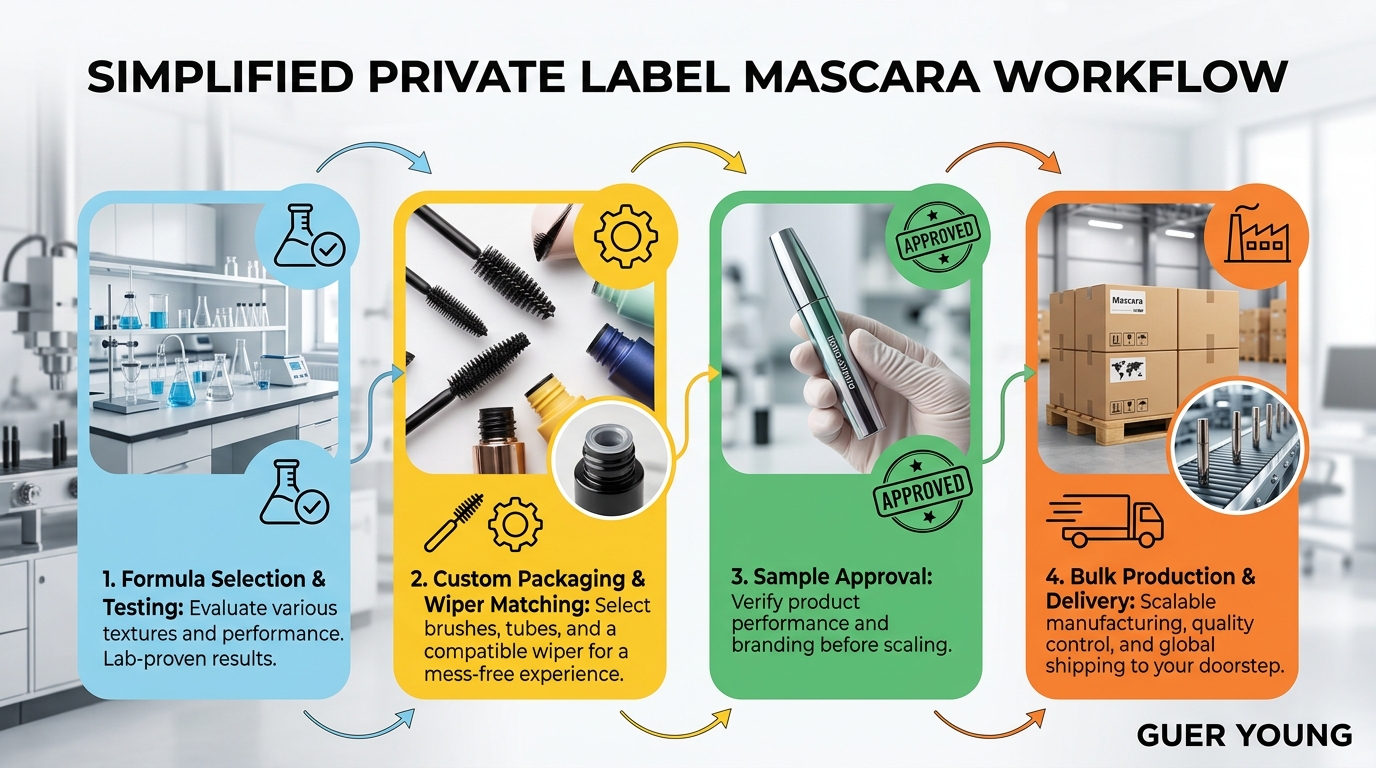
As a private label mascara supplier, we help sellers evaluate:
Mascara formulas for different markets
Brush and wiper options
Tube and packaging compatibility
Sample testing before bulk order
Quality control and documentation support
Our goal is to help you avoid common complaints like smudging before they appear in customer reviews.
Whether you need a daily wear mascara, a long-wear option, or a formula for humid climates, the right choice depends on your target market, price position, and performance requirements.
Get a Private Label Mascara Quote
FAQ
Why does my mascara smudge?
Mascara smudging is usually caused by formula film-forming properties, skin oils, humidity, too much product, or packaging and wiper design.
How can I prevent mascara smudging?
Choose a formula tested for your target conditions. Test samples under humidity, oily skin, and long-wear conditions. Confirm that product claims match actual performance.
Can waterproof mascara still smudge?
Yes. Waterproof and smudge-proof are not the same. A waterproof formula can still smudge if it interacts with skin oils.
What is the best mascara for humid weather?
There is no single best option. Look for a smudge-resistant formula that has been tested in humid conditions and matches your target customer’s wear time.
How do I test smudging before bulk order?
Run an 8-hour wear test on multiple samples. Include humid and oily skin conditions if those reflect your target market. Compare smudging, flaking, and removal side by side.


andy.li@gueryoung.com

We have 10 years of experience, focusing on the development and sales of high quality eyelash growth serum, mascara, eyebrow gel, eyebrow color and other products. We also offer custom services, from tube
design to cosmetic fillings and packaging


Room 1, C3 Factory Building, No.8803 Zhuhai Avenue, Lianwan Industrial Zone, Pingsha Town, Gaolan Port Economic Zone, Zhuhai, Guangdong,China
QUICK LINKS
D Zone,5/F, NO.8 CuiZhu 5th Street,
Qianshan Xiangzhou District,Zhuhai,
Guangdong,China,519070

lynn.zhou@gueryoung.com
winnie.zhong@gueryoung.com
niki.xu@gueryoung.com