
Why Do Cosmetic OEM Orders Fail? The Hidden Reason Behind Missing Compliance Documents
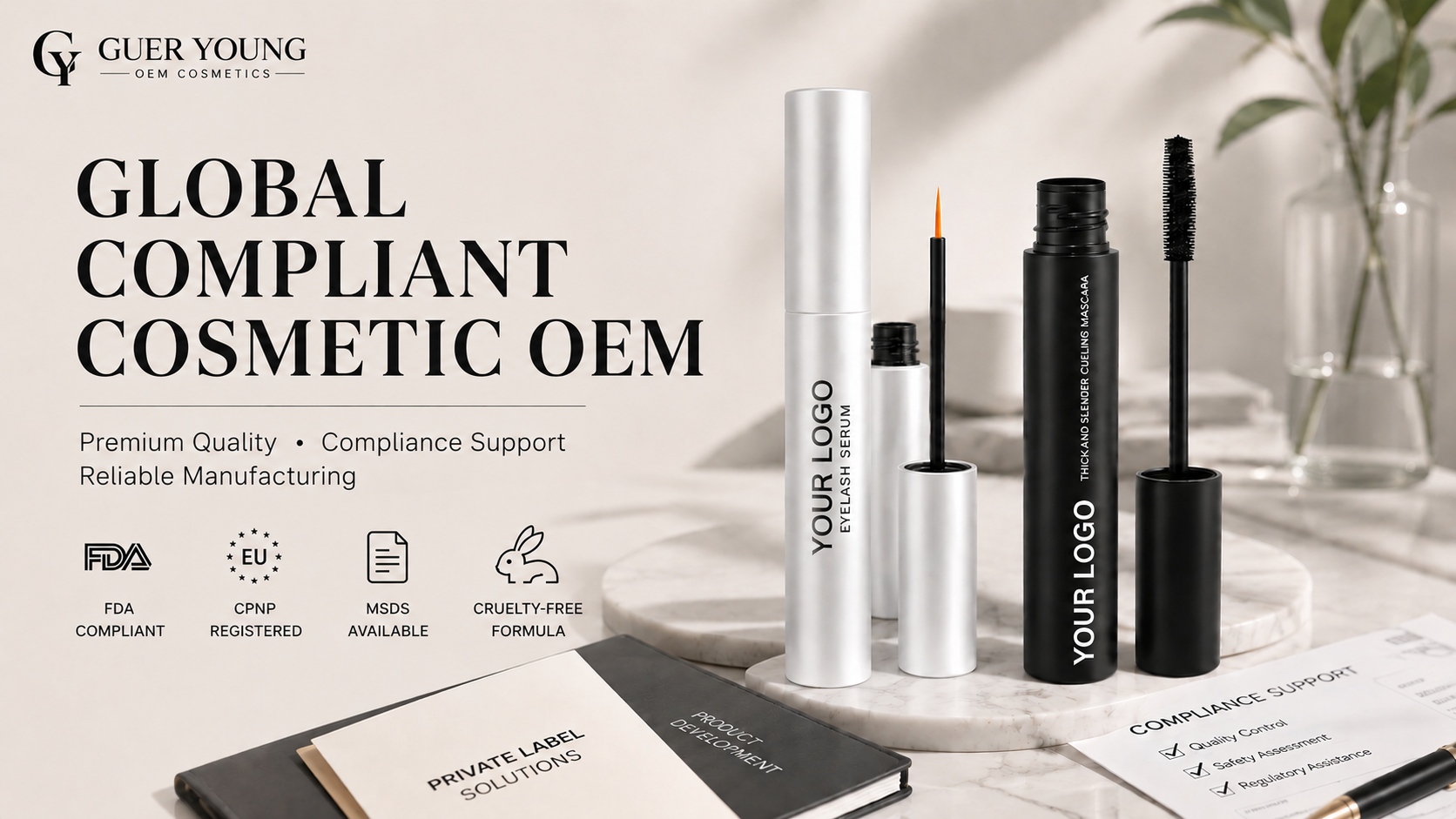
Read in English | Lire en Français | Leer en Español | Lesen auf Deutsch
For beauty brands targeting the European and American markets, product development and packaging design are only the first step. What truly determines whether a product can successfully enter the market, pass customs clearance, and launch on major platforms is often the compliance documentation behind it.
Many cosmetic brands working with OEM manufacturers encounter problems not with the formula itself, but with incomplete or inaccurate certification documents, such as:
Incomplete MSDS documentation
Improper CPNP registration
Misunderstandings about FDA requirements
Unclear animal testing statements
Missing platform compliance files
These issues can delay product launches and, in more serious cases, lead to canceled orders, rejected listings, customs detention, or even customer loss.
In the European and American beauty markets, consumers are paying increasing attention to product safety and compliance. For eye makeup products such as mascaras, eyelash growth serums, eyeliners, and eyebrow products, regulatory scrutiny is often even stricter due to their sensitive application area.
As a cosmetic OEM supplier serving Western markets for years, GUER YOUNG understands that many beauty brands do not lack creativity — they lack a complete and reliable compliance support system.
1. Incomplete MSDS Documents Are One of the Most Common Causes of Delayed Orders
Many brands assume that once they receive an MSDS (Material Safety Data Sheet), everything is ready for shipment.
However, distributors, customs authorities, logistics companies, and e-commerce platforms in Europe and the United States often carefully review whether:
Ingredients are fully disclosed
The document matches the actual formula
Transportation compliance requirements are met
Restricted substances are included
The document version is updated
Products such as eyelash growth serums and liquid eyeliners are especially sensitive because they are applied around the eyes, leading to stricter customs and platform inspections.
In many cases, shipment delays are not caused by product quality issues, but by:
Incorrect MSDS formatting
Missing CAS numbers
Inconsistencies between labels and documents
Inaccurate professional terminology in English
For Western markets, a professional, standardized, and traceable MSDS is more than just paperwork — it reflects the professionalism of the brand itself.
2. CPNP Registration Problems Often Delay Entry into the EU Market
For products entering the European Union, CPNP (Cosmetic Products Notification Portal) registration is essentially mandatory.
However, many new beauty brands frequently encounter problems such as:
Unclear responsibility for registration
Incorrect product category classification
Incomplete ingredient information
Missing PIF documentation
Labels that do not comply with EU regulations
Eye makeup products such as mascaras, eyebrow pencils, and eyeliners are subject to particularly strict EU standards regarding pigments, preservatives, and heavy metal control.
If registration information does not match the actual product, brands may face:
Platform listing rejection
Customs inspections
Product recalls
Distributor partnership termination
Many brands focus only on product pricing during the early stages and underestimate the long-term cost of compliance, which eventually delays the entire project.
A professional OEM manufacturer should provide more than production capacity — they should also offer support for regulatory compliance in target markets.
3. Misunderstanding FDA Regulations Can Put U.S. Orders at Risk
Many brands mistakenly believe:
“If a cosmetic product is sold in the U.S., it must have FDA certification.”
In reality, the FDA’s regulatory approach to cosmetics is very different from the EU system.
The most common compliance problems usually involve:
Non-compliant labeling
Overstated product claims
Improper ingredient usage
Incomplete factory information
Marketing descriptions implying medical benefits
For example, eyelash growth serums are considered relatively sensitive products in the U.S. market.
If promotional materials include claims such as:
“Treatment”
“Hair follicle regeneration”
“Medical-grade growth”
the product may be classified closer to a drug category, significantly increasing regulatory scrutiny.
As a result, many European and American beauty brands pay close attention to whether an OEM supplier:
Understands FDA compliance logic
Is familiar with Amazon, TikTok Shop, and independent website review systems
Can assist with optimizing labels and product descriptions
4. “Cruelty-Free” Has Become a Core Concern for Western Consumers
In recent years, cruelty-free beauty products have become a major trend in Europe and North America.
This is especially true for:
Independent beauty brands
Vegan cosmetic brands
Clean beauty brands
TikTok beauty sellers
Consumers are increasingly concerned about:
Whether animal testing is involved
Whether formulas contain animal-derived ingredients
Whether proper cruelty-free declarations are available
Whether the brand aligns with sustainability values
However, many brands overlook one important fact:
“Cruelty-free” is not just a marketing slogan.
Without proper supporting documentation, products may still fail platform compliance reviews.
This is becoming increasingly important on platforms such as:
Amazon
Sephora
Ulta Beauty
European e-commerce platforms
Verification standards for product claims are becoming stricter every year.
For OEM suppliers, manufacturing alone is no longer enough — documentation support and compliance assistance are equally critical.
5. In the European and American OEM Cosmetics Market, Compliance Delivery Is the Real Competitive Advantage
When selecting an OEM supplier, many brands initially focus on:
MOQ
Unit price
Packaging
Shipping speed
However, as regulations in Europe and North America become more demanding, the factors that truly affect long-term brand growth are:
Whether compliance documents are complete
Whether documentation is updated regularly
Whether the supplier understands platform review systems
Whether stable long-term production can be guaranteed
Whether the supplier keeps up with changing regulations
This is especially important for eye makeup products, which require higher standards of stability, safety, and documentation accuracy due to their sensitive usage area.
A professional cosmetic OEM partner should be more than just a manufacturer — they should function as a compliance support partner throughout the brand’s market expansion process.
If you are looking for a more reliable and experienced cosmetic supply chain partner for the European and American markets, and want to learn more about OEM solutions for mascaras, eyelash growth serums, eyeliners, eyebrow products, lip makeup, face makeup, and skincare products, feel free to explore the product and manufacturing support offered by GUER YOUNG.


andy.li@gueryoung.com

We have 10 years of experience, focusing on the development and sales of high quality eyelash growth serum, mascara, eyebrow gel, eyebrow color and other products. We also offer custom services, from tube
design to cosmetic fillings and packaging


Room 1, C3 Factory Building, No.8803 Zhuhai Avenue, Lianwan Industrial Zone, Pingsha Town, Gaolan Port Economic Zone, Zhuhai, Guangdong,China
QUICK LINKS
D Zone,5/F, NO.8 CuiZhu 5th Street,
Qianshan Xiangzhou District,Zhuhai,
Guangdong,China,519070

lynn.zhou@gueryoung.com
winnie.zhong@gueryoung.com
niki.xu@gueryoung.com