
The Most Overlooked IP Risks in Cosmetic ODM — And Why Beauty Brands Can’t Afford to Ignore Them
Read in English | Lire en Français | Leer en Español
In today’s highly competitive beauty market, more and more cosmetic brands are turning to ODM manufacturing to launch products faster, reduce development costs, and keep up with rapidly changing trends on TikTok, Instagram, and Amazon.
From mascaras and eyeliners to brow products, lip products, and complexion makeup, ODM has become one of the fastest ways for brands to scale.
But while many beauty brands focus heavily on formula performance and speed to market, they often overlook one critical issue:
Intellectual property infringement risks.
And in the cosmetic industry, these risks don’t just come from formulas.
In fact, some of the biggest legal risks are hidden in areas many brands rarely think about:
Packaging appearance
Mascara brush designs
Applicator structures
Shade naming
Product artwork
Marketing visuals
Social media content
If these elements unintentionally infringe on existing intellectual property, the consequences can be serious — including platform takedowns, customs seizures, legal disputes, or even account suspension.
Why IP Protection Matters More in the US and European Beauty Market
Consumers in the US and Europe place a high value on originality and brand identity. At the same time, platforms such as Amazon, TikTok Shop, Sephora, and Ulta have become increasingly strict about intellectual property enforcement.
For beauty brands entering these markets, compliance is no longer optional.
1. Packaging Design Can Easily Trigger Infringement Issues
One of the most common requests ODM factories receive is:
“Can you make something similar to this luxury brand?”
While this may seem harmless, it’s actually one of the biggest legal risks in cosmetic manufacturing.
Potential infringement may include:
Similar box structures
Nearly identical color schemes
Copycat typography layouts
Mimicked metallic components
Replicated magnetic closures
Even without using another brand’s logo, brands may still face claims related to “trade dress infringement” — especially if consumers could confuse the product with an existing brand.
In Western markets, visual similarity alone can become a legal issue.
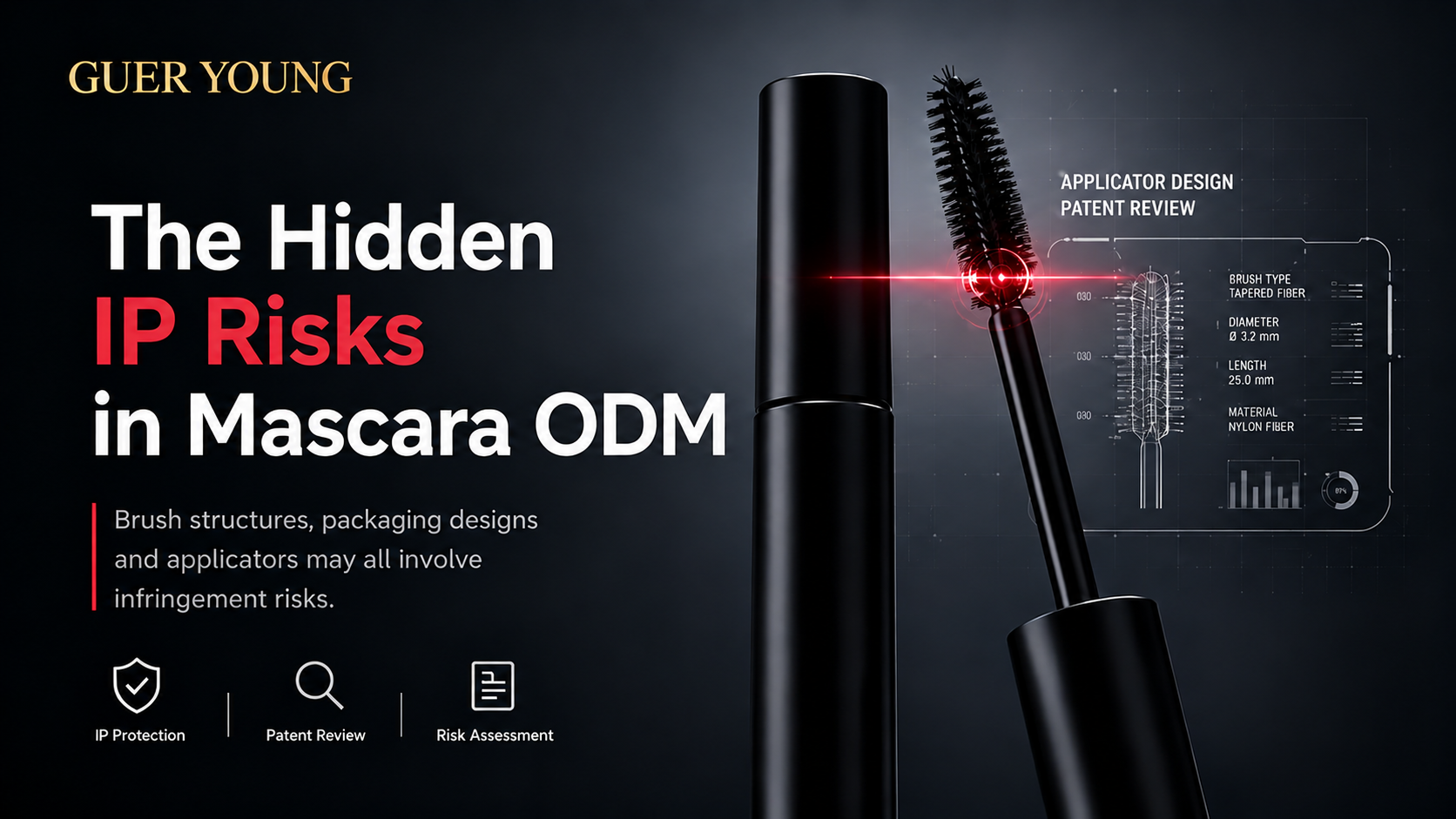
2. Mascara Brush Designs May Be Patent Protected
Many brands underestimate how heavily patented mascara brush structures can be.
This is especially important for eye makeup products.
Certain popular brush designs may already be protected by utility or design patents, including:
Curved silicone brushes
Dual-layer fiber brushes
Specialized liquid-channel applicators
Rotating brush mechanisms
Unique bristle arrangements
If an ODM supplier directly copies these structures, products may face customs detention, Amazon patent complaints, or legal action from patent holders.
For brands focused on eye makeup, this is a major area that should never be ignored.
3. Even Shade Names Can Create Trademark Problems
Many beauty brands love creating trendy shade names such as:
Nude Honey
Velvet Rose
Cherry Bomb
Pillow Kiss
But in many cases, these names may already be trademarked in cosmetics or related product categories.
In the US and Europe, brands often register:
Shade names
Collection names
Product series
Campaign slogans
Collaboration titles
Using these names without proper checks could result in trademark disputes or product removal from online platforms.
And once listings are removed, rebuilding ranking and traffic can be extremely difficult.
4. Social Media and Marketing Content Also Carry Risks
Today, many beauty brands ask ODM suppliers to help create marketing materials, product photos, and promotional videos.
However, copyright risks often arise from:
Unauthorized model photos
Reposted influencer content
Downloaded online images
AI-generated visuals with unclear ownership
Ads heavily inspired by competitors
Copyright enforcement in Western countries is extremely strict.
Even a short unauthorized video clip or image may lead to ad account restrictions or takedown notices.
Why Many Brands Only Realize the Problem Too Late
The reality is that many ODM suppliers focus only on manufacturing.
But a truly professional cosmetic supply partner should do more than produce products — they should also help brands reduce operational risks.
Unfortunately, some low-cost suppliers prioritize speed and price by:
Copying trending products
Replicating viral packaging
Reusing existing designs
Ignoring patent research
While this may reduce development time initially, it can create major long-term risks for beauty brands trying to grow internationally.
Especially for emerging brands entering the US and European markets, issues such as:
Amazon IP complaints
TikTok Shop takedowns
Customs seizures
Legal notices
Frozen payment accounts
can become extremely costly.
How Beauty Brands Can Reduce ODM Infringement Risks
1. Work With Suppliers That Offer Original Development
A professional ODM partner should provide:
Original packaging concepts
Proprietary brush options
Compliance-conscious design support
Basic IP risk awareness
Experience with Western beauty markets
Not simply “copy-and-produce” services.
2. Conduct Basic IP Checks Before Launch
Before mass production, brands should review:
Trademark availability
Design patent conflicts
Packaging similarity risks
Shade name registrations
Preventive checks are far less expensive than dealing with legal disputes later.
3. Avoid Blindly Copying Viral Products
Trending products can inspire ideas, but direct imitation is risky.
Long-term beauty brands succeed through:
Strong brand identity
Product performance
Original visual positioning
Consumer trust
—not by looking like someone else.
The Role of ODM Suppliers Has Changed
In the past, brands mainly asked:
“Who can make it cheaper?”
Today, more beauty brands are asking:
“Who can help us grow safely and sustainably?”
Especially in eye makeup categories such as:
Mascara
Eyeliner
Lash serums
Brow products
IP and compliance issues have become far more complex than many brands realize.
GUER YOUNG specializes in cosmetic ODM solutions for eye makeup products, including mascara, lash growth serum, eyeliner, and brow products, while also offering lip makeup, complexion makeup, and skincare development services. Beyond manufacturing, we focus on helping beauty brands navigate product compliance, original design, and long-term market positioning for the US and European markets — allowing brands to launch faster while minimizing potential infringement risks.


andy.li@gueryoung.com

We have 10 years of experience, focusing on the development and sales of high quality eyelash growth serum, mascara, eyebrow gel, eyebrow color and other products. We also offer custom services, from tube
design to cosmetic fillings and packaging


Room 1, C3 Factory Building, No.8803 Zhuhai Avenue, Lianwan Industrial Zone, Pingsha Town, Gaolan Port Economic Zone, Zhuhai, Guangdong,China
QUICK LINKS
D Zone,5/F, NO.8 CuiZhu 5th Street,
Qianshan Xiangzhou District,Zhuhai,
Guangdong,China,519070

lynn.zhou@gueryoung.com
winnie.zhong@gueryoung.com
niki.xu@gueryoung.com