
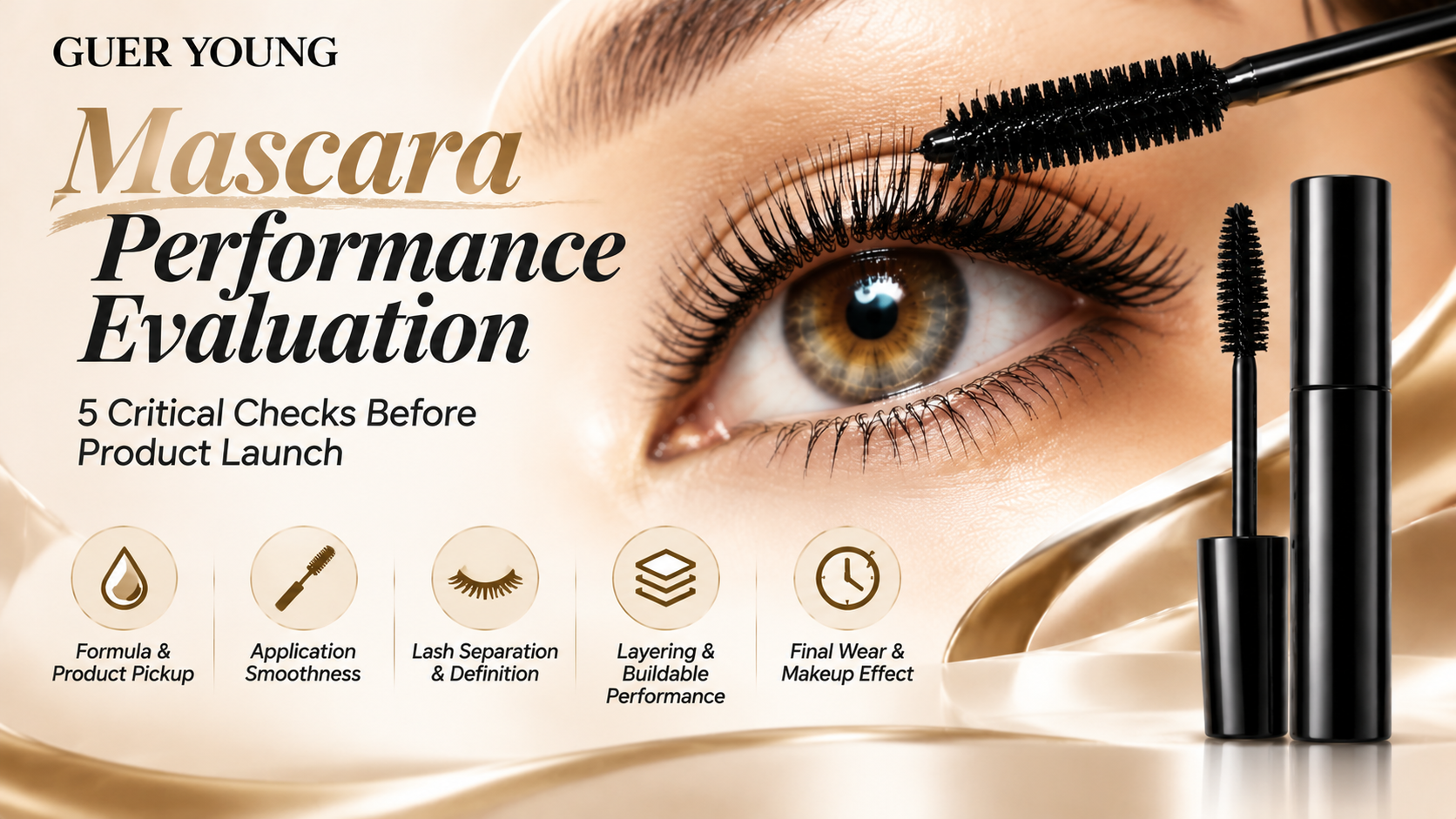
For beauty brand owners, private label beauty brands, and cosmetics startup founders, a high-quality mascara can become a top-selling hero product. But how to evaluate mascara performance accurately before launching to the 2026 market?
This mascara performance evaluation guide from GUER YOUNG breaks down 5 core checks to help you deliver mascara that meets consumer expectations and stands out in competitive beauty spaces.
1. Formula & Product Pickup Assessment
Core Formula Quality Indicators
Mascara formula performance evaluation is the foundation of any reliable mascara product evaluation. Beauty product developers must first verify two key parameters:
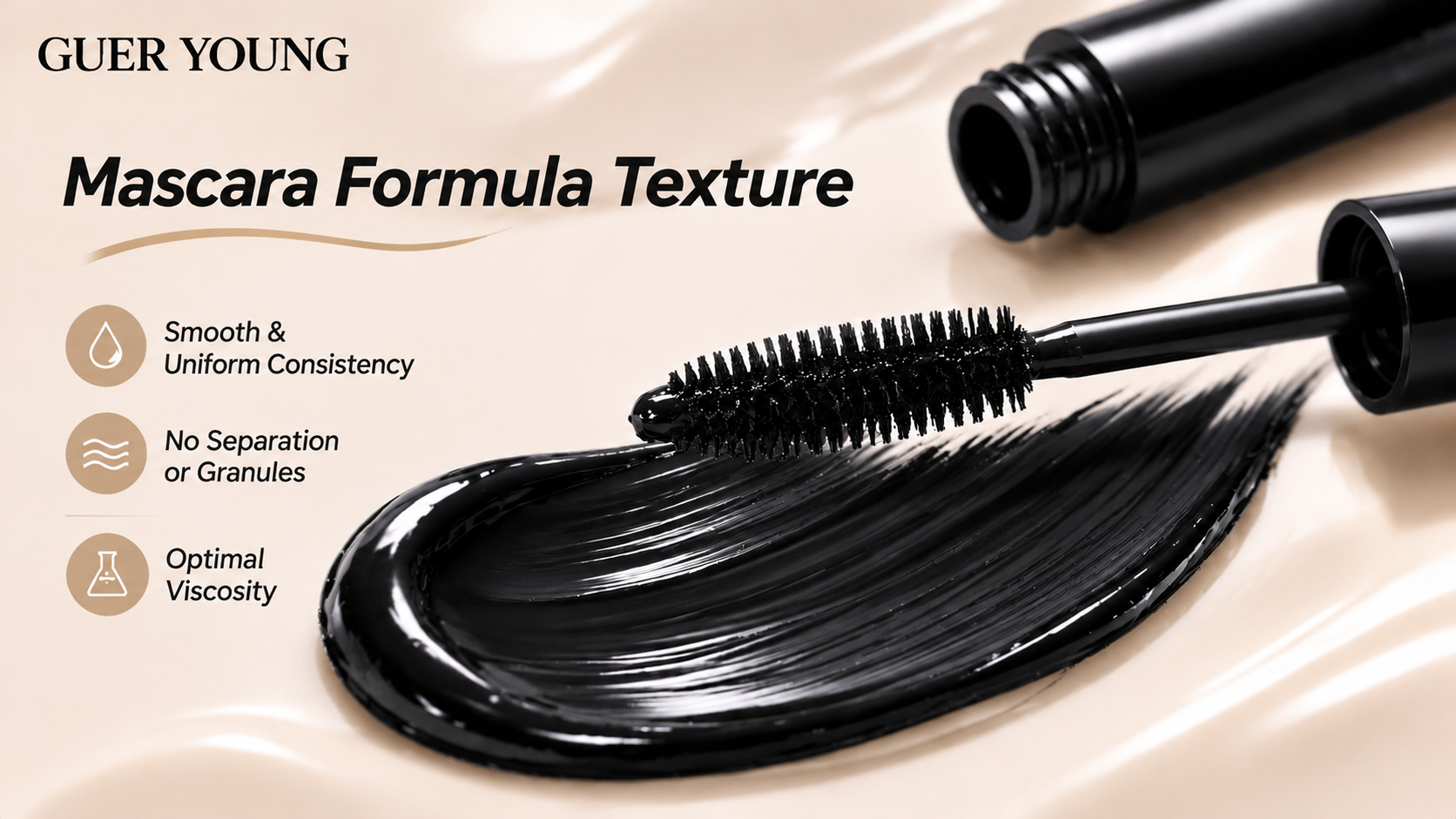
Formula consistency: The paste should be uniform, with no separation or grainy texture.
Formula viscosity: It should be thick enough to coat lashes but not so thick that it clumps immediately.
As of 2026, 68% of mascara complaints stem from poor formula texture, according to industry beauty data.
Product Pickup & Brush Loading Performance
Product pickup and brush loading directly impact the first application experience. To test this:
Dip the brush into the tube and pull it out slowly.
Observe how much formula coats the brush bristles evenly.
Wipe the brush on the tube opening and check for excess dripping.
A good formula delivers consistent brush loading without wasting product or causing mess during application.
2. Brush Application Smoothness Testing
Application Smoothness Across Lash Types
Mascara application performance testing starts with how the brush glides across lashes. For cosmetic product managers, this is one of the most important mascara performance factors for beauty brands.
Key points to test:
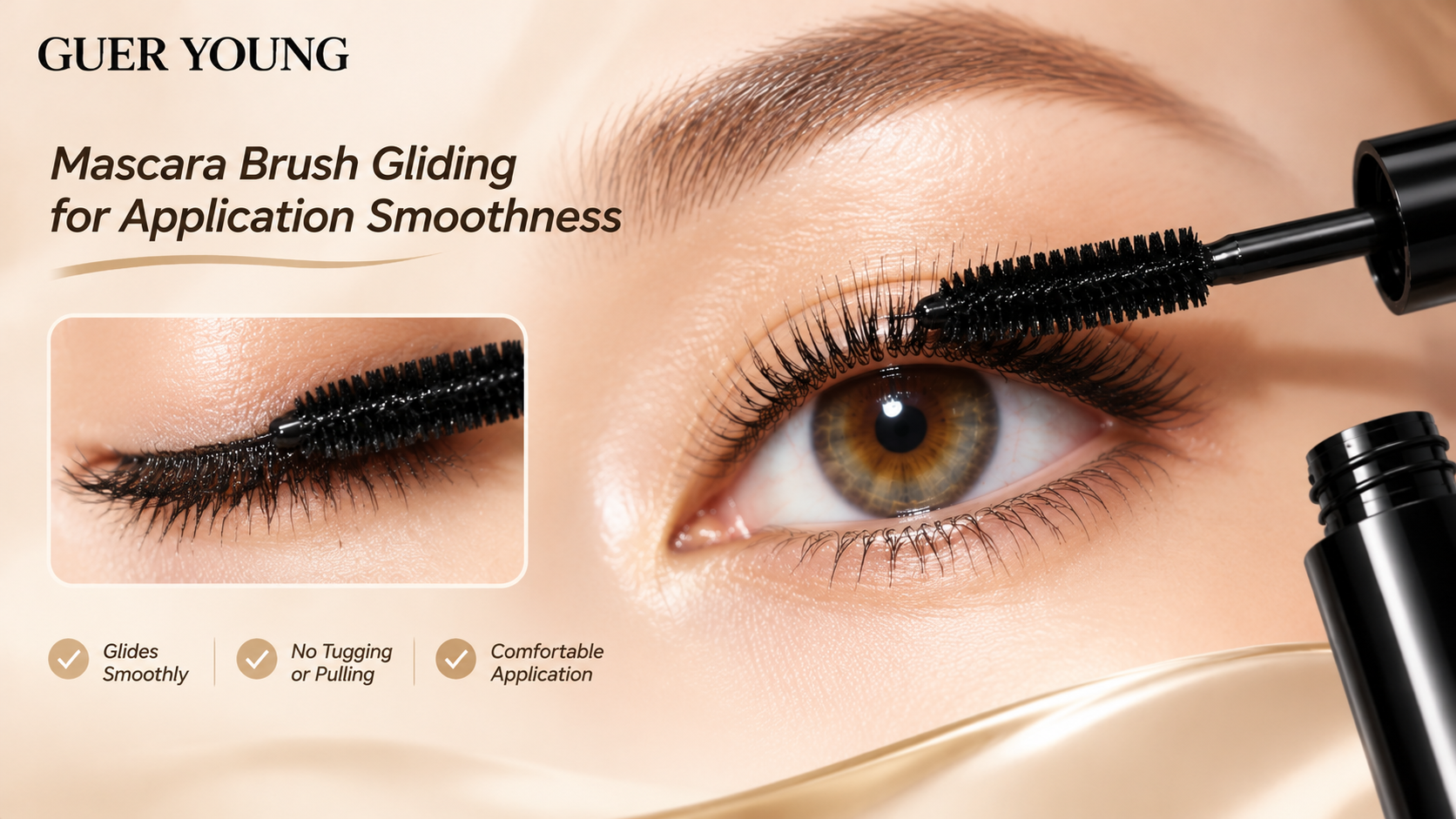
The brush should glide from lash root to tip without tugging.
It should reach short, fine lashes at the inner and outer corners of the eye.
It should work for both upper and lower lash lines without smudging.
Volumizing mascara formulas, in particular, require smooth application to avoid heavy, clumpy results.
Brush Design Compatibility
The brush shape and bristle type directly affect application smoothness. During mascara performance assessment, test:
Straight vs. curved brushes for different lash lengths.
Dense vs. sparse bristle layouts for different formula textures.
Silicone vs. fiber brushes for sensitive eye areas.
For contact lens wearers, a smooth-gliding brush reduces the risk of flaking or irritation.
3. Lash Separation & Definition Effect
Clump Formation Resistance Testing
What to test in mascara samples to avoid consumer complaints? Lash separation and clump resistance are top priorities for mascara buyers.
To test clump formation:
Apply one coat of mascara to clean lashes.
Count the number of clumped lash groups after drying.
Check for flaking or clump transfer to the eyelid.
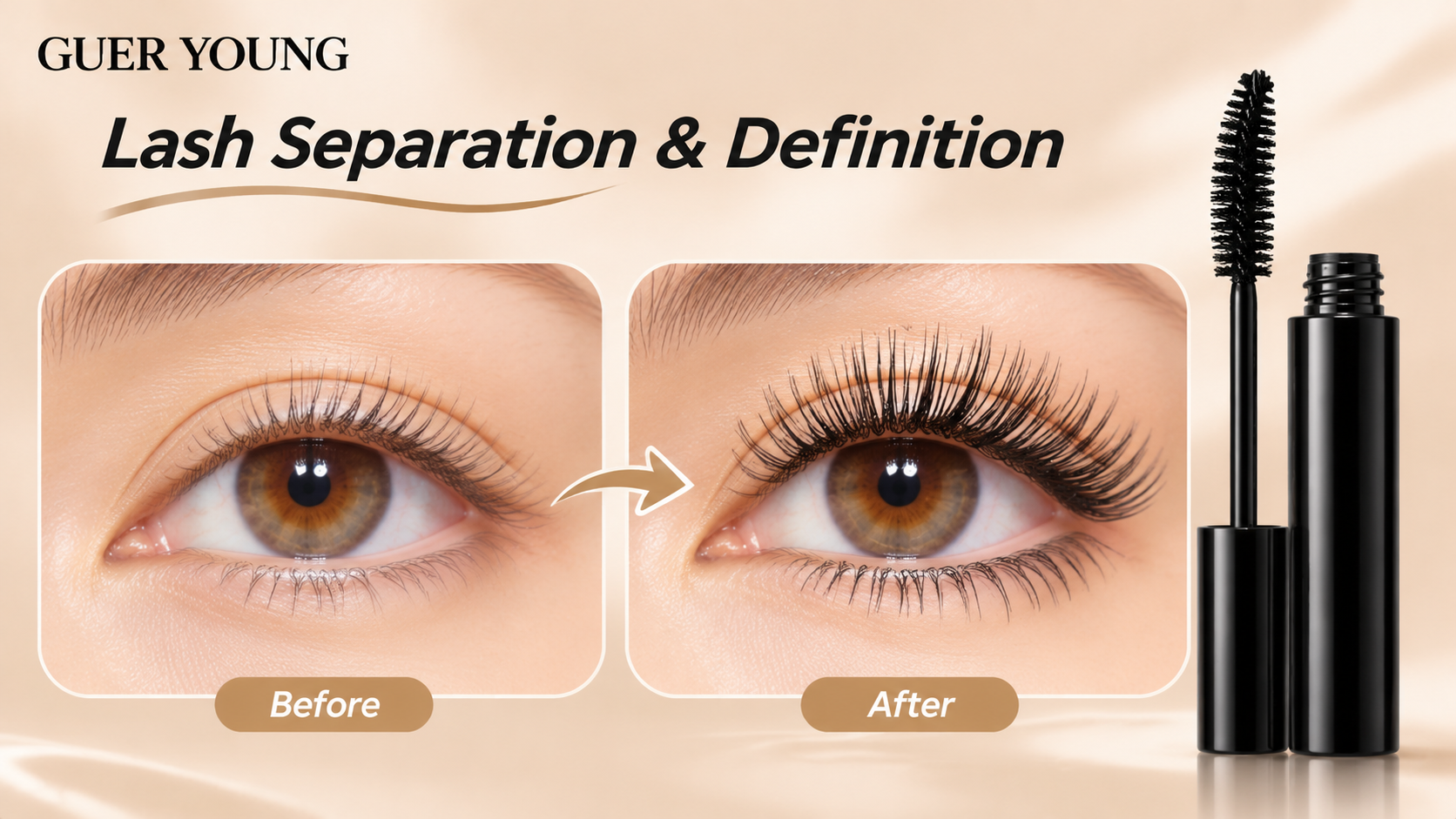
A high-quality separating mascara should leave individual lashes visible with zero to one small clump per eye.
Lash Definition & Natural Look
Lash definition is the key to a polished, professional finish. During mascara product evaluation, assess:
Whether lashes look defined, not spidery.
Whether the formula evenly coats each lash from root to tip.
Whether the effect looks natural or overly dramatic (match your product positioning).
Defining mascara, in particular, relies on excellent separation to deliver a clean, lifted lash look.
4. Layering & Buildable Performance
Layering Performance Without Clumping
Layering performance determines whether your mascara can deliver customizable results. For mascara application testing, this is a critical check for versatile products.
Test steps for layering:
Apply the first coat and let it dry for 30 seconds.
Apply a second coat and check for clumping or flaking.
Apply a third coat for maximum volume and assess weight.
Tubing mascara, popular in the 2026 market, often delivers strong layering performance without smudging.
Drying Time Between Coats
Drying time directly impacts user experience. If the formula dries too fast, second coats will tug and clump. If it dries too slow, users risk smudging.
Ideal drying time for the first coat is 25-35 seconds, allowing enough time for layering without long waits.
5. Final Wear & Makeup Effect Validation
Long-Lasting Wear Performance
How to assess mascara quality before launch? The final wear test is the ultimate proof of product quality. For cosmetics startup founders, this step prevents costly post-launch returns.
Test conditions include:
8-hour wear test under normal daily conditions.
Sweat and humidity resistance testing.
Smudge resistance for oily skin or contact lens wearers.
A quality mascara should maintain its effect for 8+ hours without significant flaking or smudging.
Targeted Effect Matching
Finally, verify that the final effect matches your product positioning:
Lengthening mascara should show 30%+ visible lash length increase.
Curling mascara should maintain lash curl for 6+ hours.
Volumizing mascara should deliver full, thick lashes without heaviness.
This final check ensures your product delivers on its marketing promises.
Final Thoughts
A complete mascara performance evaluation for private label brands covers formula, application, separation, layering, and final effect. By following this mascara product testing checklist for brands, you can launch with confidence.
At GUER YOUNG, we help beauty brands of all sizes develop and test high-quality mascara products that meet 2026 market standards.





