
Mascara OEM Supplier Checklist: How Global Cosmetic Brands Find Reliable Manufacturing Partners
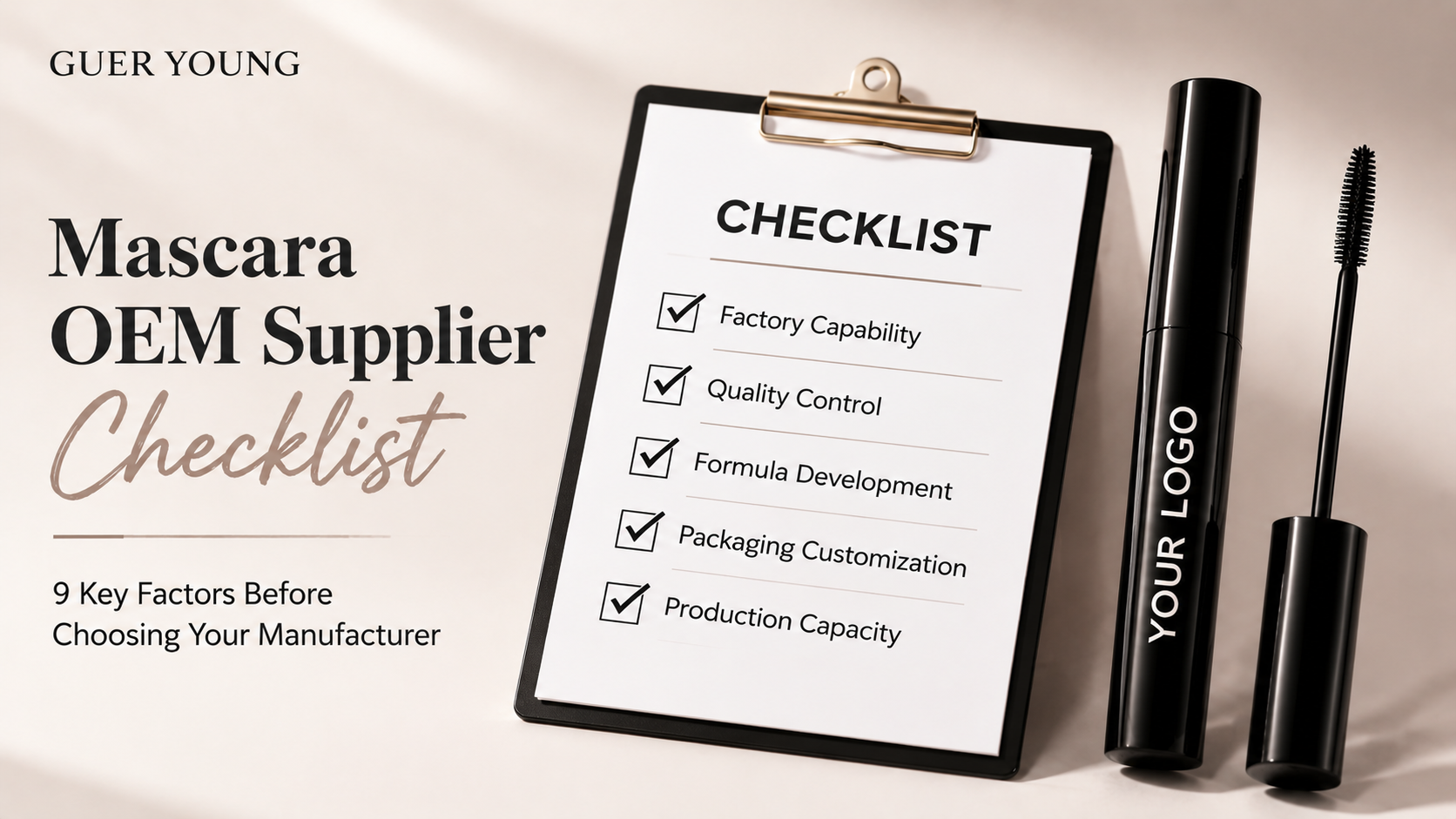
Read in English | 日本語で読む | Leggi in Italiano
For global cosmetic brands, selecting the right mascara OEM supplier is a critical decision that directly impacts product quality, brand reputation, and market competitiveness. However, many international procurement managers face a common challenge when sourcing cosmetic manufacturers: the lack of a systematic supplier evaluation framework.
With hundreds of cosmetic manufacturers available worldwide, it can be difficult to identify which suppliers truly have strong R&D capabilities, reliable manufacturing systems, quality control processes, and long-term partnership potential.
A comprehensive supplier assessment checklist allows procurement teams to evaluate manufacturers from multiple perspectives, reduce supply chain risks, and select the right partner for sustainable brand growth.
1. Verify the Supplier’s Professional OEM Manufacturing Capabilities
When selecting a mascara supplier, the first step is to evaluate whether the company has a mature and professional manufacturing system.
A reliable OEM partner should not only be able to handle large-scale production but also provide complete support from product concept development to finished product delivery.
When reviewing a mascara OEM supplier, international procurement managers should consider:
Whether the supplier owns professional cosmetic production facilities;
Whether they have an experienced R&D team;
Whether they support both OEM and ODM cooperation models;
Whether they can develop different types of mascara products;
Whether they have experience working with international beauty brands.
Mascara is a highly technical makeup product involving formula development, brush design, waterproof performance, staying power, and user experience. Therefore, a supplier’s ability to integrate research, development, and manufacturing is a key factor in evaluating long-term cooperation value.
GUER YOUNG specializes in beauty care and color cosmetics research, development, and manufacturing. The company provides mascara, eyelash growth serums, eyeliners, eyebrow gels, and other beauty products for beauty brands, cosmetic distributors, and private label customers worldwide.
With professional R&D capabilities and a mature production system, GUER YOUNG helps customers complete product development, brand customization, and fast market launch through flexible OEM/ODM solutions.
2. Build a Comprehensive Supplier Audit Checklist
Many procurement teams focus heavily on product pricing while overlooking supply chain stability. In reality, a detailed mascara supplier checklist helps buyers evaluate suppliers from multiple important aspects.
A professional supplier assessment should include:
Factory Qualification and Compliance Capability
International cosmetic markets have strict requirements regarding product safety and regulatory compliance. Therefore, suppliers must have effective quality management systems.
Procurement managers should verify:
Whether the manufacturer follows cosmetic production standards;
Whether product testing documents can be provided;
Whether products comply with target market regulations;
Whether standardized manufacturing procedures are in place.
Reliable suppliers should understand international compliance requirements and help brands reduce risks during market entry.
Product Development and Innovation Capability
With increasing competition in the beauty industry, consumers expect better performance and more innovative cosmetic products.
When selecting a mascara OEM manufacturer, brands should evaluate:
Whether the supplier can develop innovative formulas;
Whether customized colors and packaging are available;
Whether products can be adjusted according to market trends;
Whether the supplier has a stable product development process.
Manufacturers with strong R&D capabilities can help brands launch competitive products faster and respond effectively to market changes.
3. Evaluate Manufacturing Capacity and Quality Control Systems
For international procurement managers, production stability directly affects sales plans and product availability.
During supplier evaluation, pay attention to:
Raw material sourcing management;
Production environment control;
Manufacturing procedures;
Finished product inspection;
Batch-to-batch consistency.
A professional manufacturer should not only produce products but also ensure every order meets consistent quality standards.
GUER YOUNG has established a complete product development and manufacturing management system, covering product research, production, and quality inspection. Through systematic quality control processes, GUER YOUNG helps beauty brands improve product consistency and reduce supply chain management pressure.
For growing cosmetic brands, stable manufacturing capability is often more valuable than simply choosing the lowest-cost supplier.
4. Focus on Private Label Customization Capability
As competition in the beauty market continues to increase, more cosmetic brands are looking for differentiated products to strengthen their market position. Therefore, finding a professional private label mascara supplier has become an important goal for many international buyers.
A reliable OEM partner should be able to support brands beyond basic manufacturing and provide flexible customization solutions throughout the product development process.
Procurement teams should confirm whether the supplier supports:
Customized brand logos;
Packaging design services;
Formula customization;
New product development;
Small-batch testing production.
Flexible private label solutions allow brands to reduce product development costs while creating unique products that match their target market needs.
For emerging beauty brands, working with a supplier that provides complete customization services can accelerate the transition from product concept to commercial launch.
A professional supplier should also understand that every beauty brand has different positioning, customer groups, and market strategies. The ability to adjust formulas, packaging, and product features according to brand requirements is an important advantage when selecting a long-term manufacturing partner.
5. Review Supplier Project Management and Communication Skills
During international cooperation, communication efficiency is another important factor affecting project success.
A professional supplier should provide:
Fast response to customer requirements;
Clear project timelines;
Professional technical communication;
Reliable order management processes.
Especially during new product development, procurement managers need efficient communication regarding sample approval, packaging adjustments, production schedules, and delivery planning.
Strong project management capabilities help reduce development delays and improve product launch efficiency.
For international brands, a supplier’s service capability is not only reflected in manufacturing but also in how effectively they manage the entire cooperation process.
A reliable partner should be able to coordinate different stages of development, provide timely updates, and support customers from initial consultation to final production.
6. Conduct a Systematic Supplier Evaluation
Before selecting a manufacturing partner, procurement teams should complete a detailed cosmetic OEM supplier evaluation.
A recommended evaluation system includes:
| Evaluation Area | Key Factors |
|---|---|
| Product Capability | Formula development, product innovation |
| Manufacturing Capability | Production capacity, delivery reliability |
| Quality System | Testing procedures, product consistency |
| Service Capability | Communication efficiency, project management |
| Compliance Capability | International market requirements |
A structured evaluation process helps avoid problems caused by choosing unsuitable suppliers, such as quality issues, delivery delays, or negative brand impact.
International procurement managers should avoid making decisions based only on product prices. A supplier with lower initial costs may create additional expenses if problems occur during production, quality inspection, or delivery.
A complete supplier evaluation system helps brands identify manufacturers that provide stable quality, reliable cooperation, and long-term business value.
7. Choose a Supplier with International Market Experience
For beauty brands selling across different regions, a supplier’s international experience is extremely important.
A professional international cosmetic supplier should understand:
Different market regulations;
International packaging standards;
Export procedures;
Overseas customer requirements.
When selecting a supplier, procurement managers should consider whether the company has experience working with global clients and whether it can provide stable long-term supply support.
GUER YOUNG provides professional OEM/ODM services for beauty brands worldwide, helping customers overcome challenges such as long product development cycles, complex supply chain management, and the need for faster product launches.
By combining product development expertise with manufacturing capabilities, GUER YOUNG supports brands in creating customized beauty products that meet different market requirements.
For international buyers, choosing a supplier with global cooperation experience can significantly improve communication efficiency and reduce potential supply chain risks.
8. Pay Attention to Mascara Production Quality Control
The final consumer experience depends heavily on product quality. Therefore, mascara production quality control is one of the most important parts of supplier evaluation.
Quality management should cover:
Raw material inspection;
Formula stability testing;
Production process monitoring;
Finished product appearance inspection;
Performance evaluation.
Only suppliers with strong quality systems can consistently deliver products that meet brand expectations.
For mascara products, quality control is especially important because consumers expect reliable performance in areas such as application smoothness, durability, waterproof performance, and comfort.
A professional manufacturer should have strict inspection procedures to ensure product consistency from the first production batch to future large-scale orders.
9. How to Identify a Mascara OEM Supplier Worth Long-Term Cooperation
A valuable supplier should be more than a manufacturer. The right partner should support the long-term growth and development of a beauty brand.
International procurement managers should consider:
Does the supplier have professional R&D capabilities?
Does the supplier have stable manufacturing capacity?
Can the supplier provide flexible customization?
Does the supplier understand international market requirements?
Can the supplier offer complete OEM/ODM services?
Choosing the right manufacturing partner helps brands reduce development risks and improve market competitiveness.
The ideal mascara OEM partner should combine technical expertise, production reliability, quality management, and responsive customer service.
Conclusion: Build a Scientific Evaluation System and Find a Reliable Mascara OEM Partner
Selecting a mascara OEM supplier requires comprehensive evaluation of R&D capability, manufacturing strength, quality management, and service experience.
GUER YOUNG focuses on beauty care and color cosmetics research, development, and manufacturing. With professional R&D teams, mature production systems, and flexible OEM/ODM capabilities, GUER YOUNG provides high-quality beauty product solutions for beauty brands, cosmetic distributors, and private label customers worldwide.
For international procurement managers searching for reliable manufacturing partners, establishing a scientific supplier evaluation checklist and choosing a manufacturer with proven R&D and production capabilities is a key step toward sustainable brand growth.
A strong OEM partnership does not only help brands launch products faster but also creates long-term supply chain advantages in the competitive global beauty market.


andy.li@gueryoung.com

We have 10 years of experience, focusing on the development and sales of high quality eyelash growth serum, mascara, eyebrow gel, eyebrow color and other products. We also offer custom services, from tube
design to cosmetic fillings and packaging


Room 1, C3 Factory Building, No.8803 Zhuhai Avenue, Lianwan Industrial Zone, Pingsha Town, Gaolan Port Economic Zone, Zhuhai, Guangdong,China
QUICK LINKS
D Zone,5/F, NO.8 CuiZhu 5th Street,
Qianshan Xiangzhou District,Zhuhai,
Guangdong,China,519070

lynn.zhou@gueryoung.com
winnie.zhong@gueryoung.com
niki.xu@gueryoung.com