
How to Choose the Right Mascara Tube and Wand Combination for Private Label Products
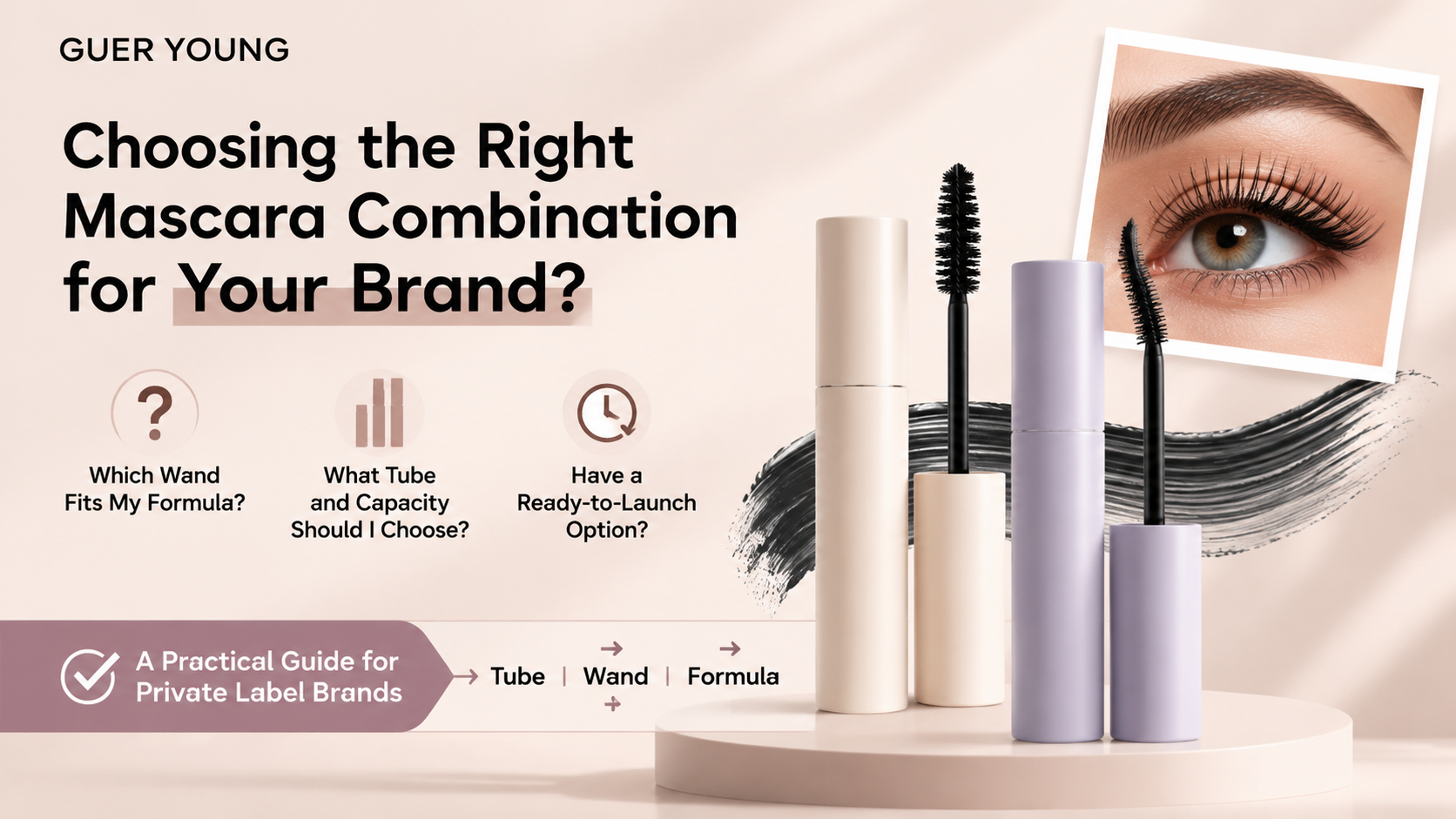
For beauty brands planning to launch a new mascara or expand their eye makeup range, choosing the right tube and wand combination involves more than appearance. It also affects application experience, product performance, and how consumers perceive the finished product.
Different brands have different product priorities. Some want to focus on volume, while others prefer lengthening, curling, or waterproof performance. Packaging design also plays an important role in creating a recognizable product identity.
When selecting private label mascara, brands do not necessarily need to develop an entirely new product from scratch. Comparing existing finished mascara products based on their tube designs, wand types, and formula characteristics can be a practical starting point. Packaging and branding details can then be adjusted according to specific requirements.
This guide explains the key factors to consider when choosing a mascara tube and wand combination, with examples of existing finished products to help brands make more informed decisions.
1. What to Consider When Choosing a Mascara Tube
The tube is one of the first things consumers notice about a mascara product. Beyond appearance, brands should consider capacity, overall dimensions, and whether the design matches their product positioning.
1.1 Tube Capacity
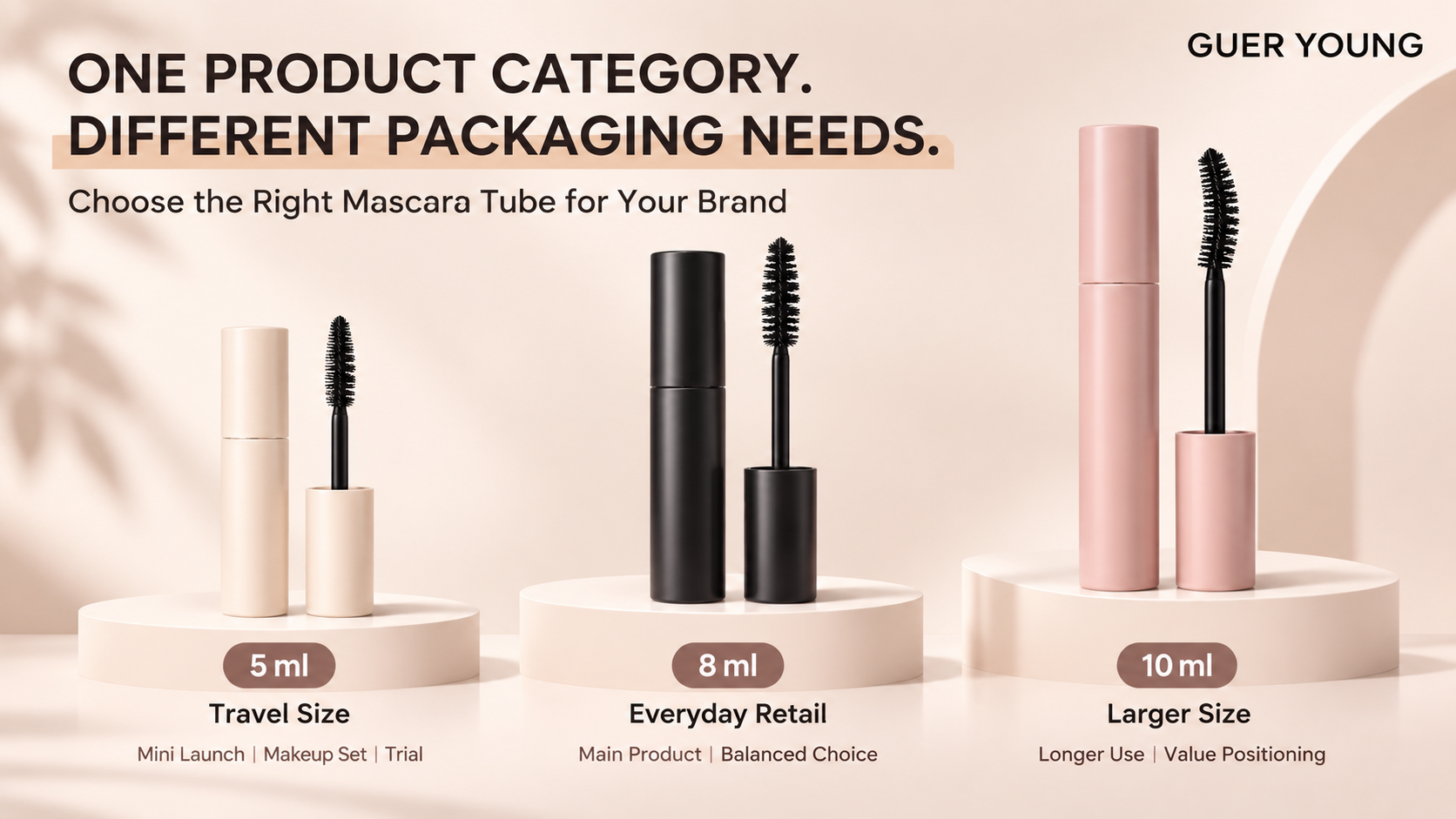
Common mascara capacities include 5ml, 8ml, and 10ml. Each size can serve different product positioning needs.
5ml: Suitable for mini products, travel sizes, and makeup sets. It can also be an option for brands testing a new product concept.
8ml: A common choice for regular retail products, offering a balance between product capacity and packaging size.
10ml and above: Suitable for brands looking to offer larger product sizes or emphasize extended product usage.
Brands should consider their target market, sales channels, and pricing strategy when selecting capacity rather than simply choosing a larger tube.
1.2 Tube Appearance and Brand Style
Tube color, shape, and surface finish all contribute to the overall product appearance.
For example:
Matte black: Suitable for minimalist, professional, or premium product positioning.
Transparent tubes: Allow consumers to see the product's appearance and can support more distinctive visual designs.
Metallic finishes: Help create a refined and premium look.
Gradient colors or decorative details: Suitable for seasonal collections, new product launches, and products with distinctive visual themes.
When selecting a tube, brands should compare it with their existing product range to maintain a consistent visual identity.
2. How to Choose the Right Mascara Wand
The wand is an important factor in the mascara application experience. Different brush structures influence formula pickup, distribution, and the appearance of the lashes.
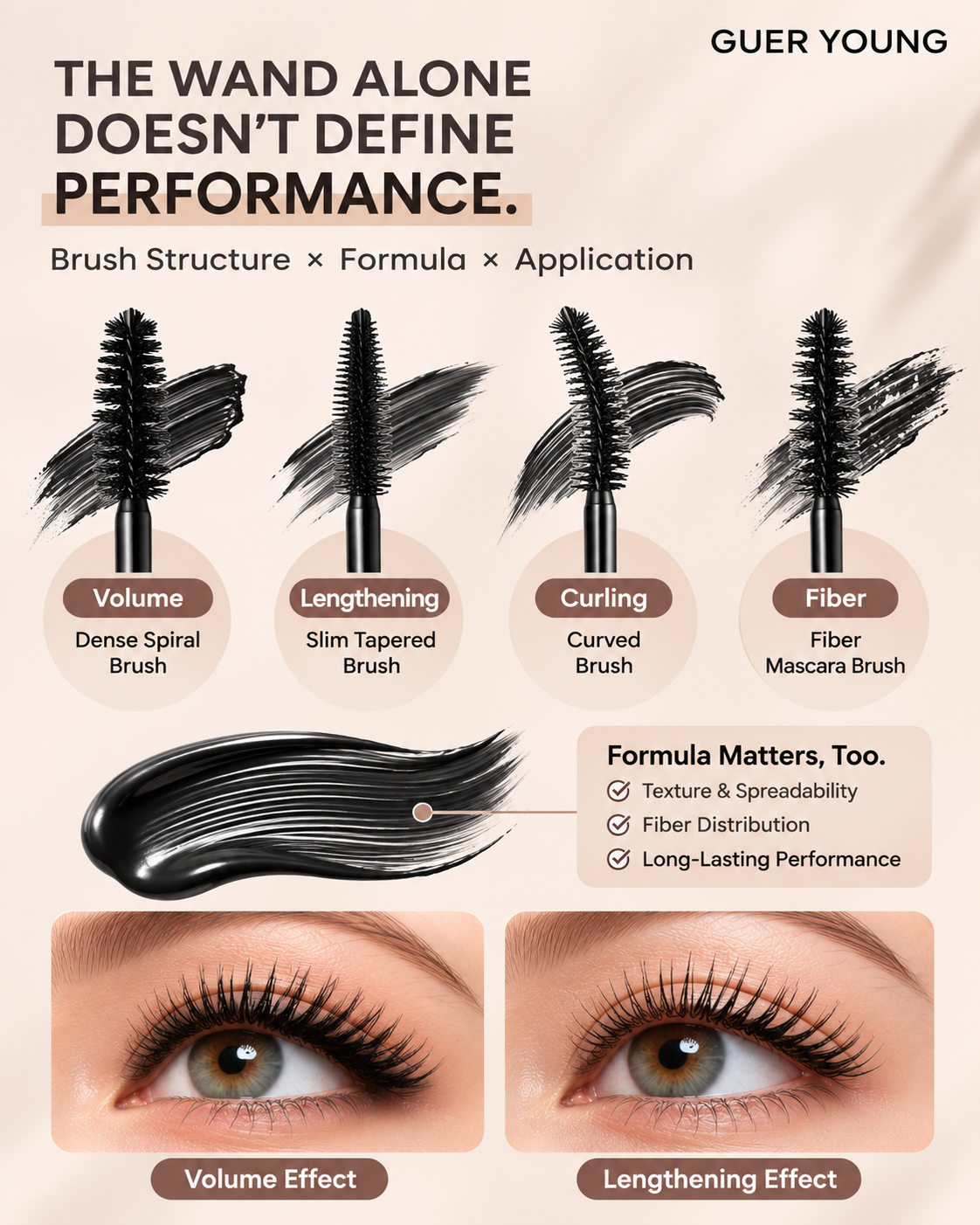
2.1 Dense Spiral Brush
A dense spiral brush typically features closely arranged bristles that help distribute mascara across the lashes. It is often considered for products designed to emphasize volume.
When comparing this type of wand, brands should pay attention to bristle density, brush thickness, and formula pickup to ensure the applicator is suitable for different lash areas.
2.2 Slim Tapered Brush
A slim tapered brush has a narrower tip, making it easier to reach shorter lashes and areas around the inner and outer corners of the eyes.
This design is suitable for products that focus on precise application and a more defined lash appearance. It can also be useful for brands looking to improve application around both upper and lower lashes.
2.3 Curved Brush
A curved brush is designed to follow the natural shape of the lashes, helping users apply mascara from the roots toward the tips.
It is often considered for products positioned around a curled lash effect. However, the final curling performance also depends on the formula and application technique, not just the brush shape.
2.4 Fiber Mascara Brush
Fiber mascaras contain additional fibers that help create a longer and fuller-looking lash effect.
When selecting this type of product, brands should consider not only the wand structure but also fiber distribution, formula spreadability, and the overall application result. The brush should help distribute the formula and fibers evenly without creating noticeable clumps.
3. How Tube, Wand, and Formula Combinations Affect the Final Product
When selecting mascara, brands should evaluate the tube, wand, and formula together rather than treating them as separate elements.
Product Positioning | Wand Selection | Formula Characteristics | Tube Selection |
Volumizing | Dense bristles | Designed to create a fuller lash appearance | Choose a tube that matches the product positioning |
Lengthening | Slim or tapered brush | Focuses on a lengthened lash appearance | A clean and refined design may be suitable |
Curling | Curved or spiral brush | Focuses on curl performance | Select a design that complements the product style |
Fiber | Brush suitable for even formula distribution | Contains fibers that help create longer-looking lashes | Choose according to brand positioning and target market |
These are general selection guidelines rather than fixed combinations. The same brush type can produce different results when paired with different formulas.
Examples of Existing Finished Mascara Products
For brands that prefer not to spend significant time developing a product from scratch, comparing existing finished mascara options can be a practical starting point.
For example, GUER YOUNG offers products with different formula characteristics and positioning:
CP0036 – Volume + Length Mascara
Type: Non-fiber mascara
Capacity: 8ml
Product positioning: Volume and length
Suitable for brands looking to offer a mascara that addresses both volumizing and lengthening needs.
JRA036460 – Waterproof Curly Mascara
Type: Fiber mascara
Product positioning: Waterproof and curling
Suitable for brands interested in developing a fiber-based mascara with waterproof and curling positioning.
By comparing formula types, product positioning, and wand designs, brands can better identify which finished mascara option matches their market requirements.
4. How Private Label Brands Can Select the Right Finished Mascara
Once the product direction is clear, brands can follow several steps to narrow down suitable finished mascara options.
Step 1: Define Your Product Positioning
Decide whether the new product should focus on volume, length, curl, or waterproof performance. Consider the target consumer and expected retail price as well.
Step 2: Select the Tube Appearance and Capacity
Choose tube colors, shapes, and capacities that match your brand identity. For brands with an existing product range, consider whether the new packaging will complement current products.
Step 3: Compare Wand Designs and Formulas
Do not evaluate a mascara wand based on appearance alone. Consider the formula texture, bristle structure, formula pickup, and actual application results.
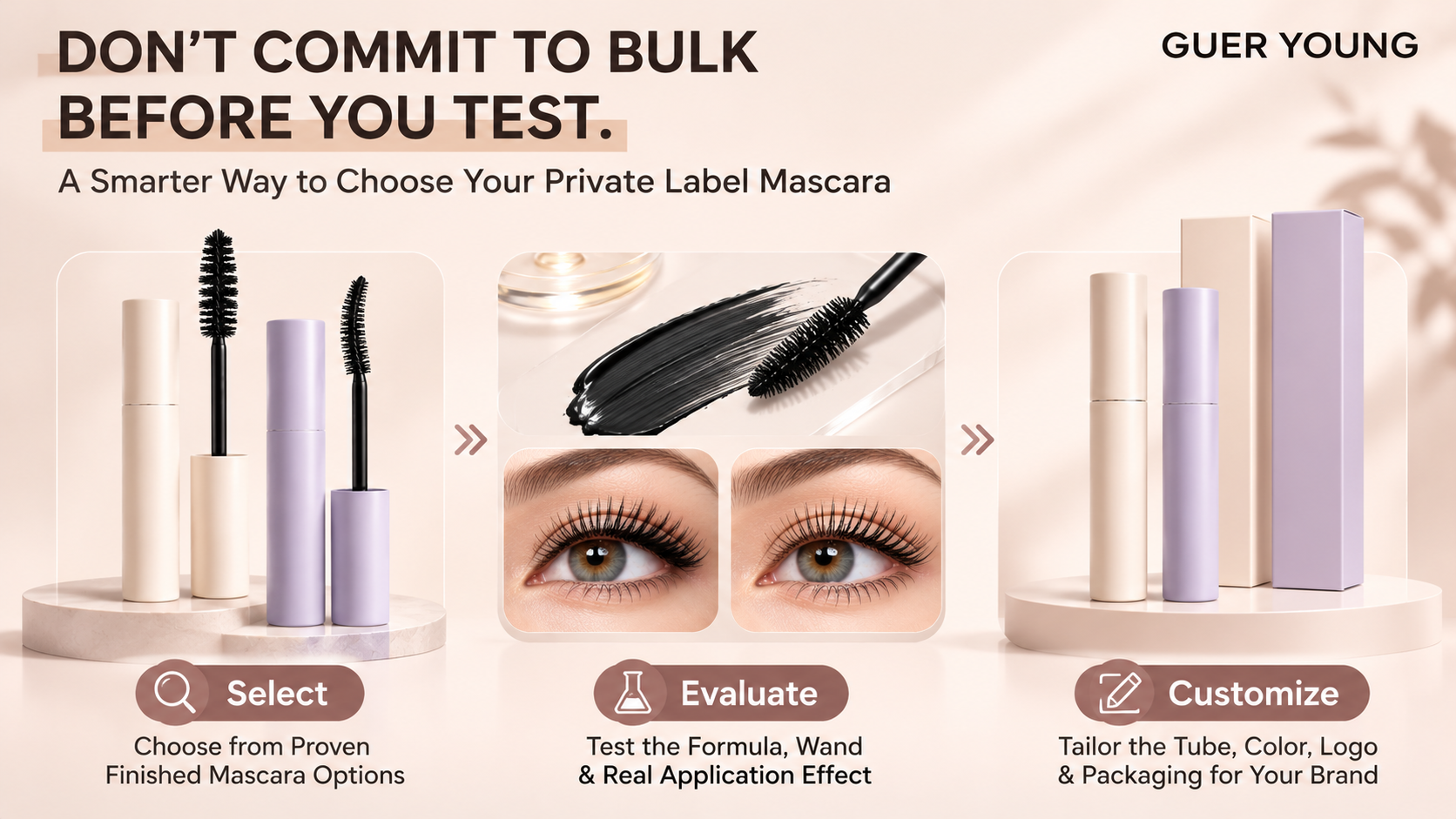
Step 4: Request Samples for Testing
Before placing a bulk order, request physical samples and evaluate the following:
Whether the wand picks up and distributes the formula evenly.
Whether the formula clumps during application.
Whether the product delivers the expected volume, length, or curl effect.
Whether the formula is prone to smudging or flaking.
Whether the tube closure and overall application experience meet expectations.
Step 5: Confirm Private Label Requirements
After selecting a suitable base product, discuss logo printing, tube colors, packaging design, and other customization requirements. This allows brands to develop their own product identity based on an existing finished mascara.
5. Common Mistakes When Selecting Finished Mascara Products
Focusing only on tube appearance
Attractive packaging can help capture consumer attention, but the wand and formula are equally important to the everyday application experience.
Assuming one wand type works with every formula
Different formulas have different textures, spreadability, and pickup characteristics. Their performance should be evaluated through actual product samples.
Using capacity as the only measure of product value
Capacity alone does not determine product positioning. Packaging design, formula performance, application experience, and retail pricing should all be considered.
Placing bulk orders without testing samples
Product photos cannot fully demonstrate formula texture, wand pickup, or actual application results. Sample testing helps brands identify potential issues before production.
6. Choosing the Right Finished Mascara Supplier
For private label brands, finding a suitable product is only the first step. A supplier's existing product range, production capabilities, and customization services are also important considerations.
When evaluating potential suppliers, brands should check:
Whether the supplier offers different finished mascara styles and formula types.
Whether product samples are available for evaluation.
Whether logo printing, tube appearance, and packaging customization are supported.
Whether relevant quality inspection procedures and product documentation are available.
Whether the supplier can meet MOQ, lead time, and future replenishment requirements.
GUER YOUNG specializes in finished eye makeup products, offering OEM/ODM and Private Label services for mascara and other eye makeup products. Brands can explore existing product options based on their positioning and discuss further customization and cooperation requirements.
Conclusion
Choosing the right mascara tube and wand combination does not necessarily mean developing an entirely new product from scratch. For many brands, starting with an existing finished mascara and evaluating its formula, wand design, and packaging appearance is a more straightforward approach to product selection.
Before confirming the final product, brands should compare physical samples, evaluate application performance, and finalize their packaging and customization requirements. This can reduce uncertainty during product selection and help brands move forward with new product launches more efficiently.


andy.li@gueryoung.com

We have 10 years of experience, focusing on the development and sales of high quality eyelash growth serum, mascara, eyebrow gel, eyebrow color and other products. We also offer custom services, from tube
design to cosmetic fillings and packaging


Room 1, C3 Factory Building, No.8803 Zhuhai Avenue, Lianwan Industrial Zone, Pingsha Town, Gaolan Port Economic Zone, Zhuhai, Guangdong,China
QUICK LINKS
D Zone,5/F, NO.8 CuiZhu 5th Street,
Qianshan Xiangzhou District,Zhuhai,
Guangdong,China,519070

lynn.zhou@gueryoung.com
winnie.zhong@gueryoung.com
niki.xu@gueryoung.com